

For nearly a decade, shippers could practically set their calendars by FedEx’s annual 4.9% rate increase. It was predictable. Then came the FedEx 2022 general rate increase, which broke the mold with a 5.9% hike, signaling a new era of more aggressive pricing. This wasn’t just a one-time adjustment; it was a fundamental shift in carrier strategy that has continued with even higher increases. For any business shipping in high volumes, understanding this change is critical. We’ll break down what these rate hikes really mean, look at the details hidden behind the averages, and show you how to prepare your budget.
Effective January 2, 2023, FedEx Express (Domestic, US Export and US Import), FedEx Ground, and FedEx Home Delivery shipping rates will increase by an average of 6.9%. FedEx Freight will increase rates by 6.9% for PZONE/EZONE base rate shippers and 7.9% for FXF 1000/501 base rate shippers. Remember, there is often a discrepancy between the announced increases and the effect that the increase has on individual shippers. Our team at Shipware has identified several important takeaways for shippers to take note of and assess:
1. Record high rate increase for 2023
After breaking the decade-long trend of a 4.9% increase with a 5.9% increase in 2022, FedEx adds another point to their GRI for 2023, with Brie Carere, Chief Customer Officer, citing “the inflationary backdrop” as the rationale for the historic increase. Raj Subramaniam also said, “we did not anticipate…the tremendous inflation of costs that hit us squarely last year.” Both of these statements were answers to questions during FedEx’s Q1 2023 earnings call on September 22. In 2009, FedEx increased its express rates by 6.9% but offset the increase by reducing the fuel surcharge by 2 percent. Notably, fuel was not changed in this year’s announcement. It will be interesting to see if UPS matches the 6.9% increase. My guess is UPS is currently adjusting their 2023 rates from a 5.9% increase to a 6.9% increase.
A Look Back: The 2022 FedEx Rate Increase
To really understand the gravity of the 2023 rate hike, it helps to look at the precedent set the year before. The 2022 General Rate Increase (GRI) was a major turning point. For nearly a decade, shippers had grown accustomed to predictable annual increases of around 4.9%. But in 2022, FedEx broke from tradition with its most substantial rate hike since 2013. This move signaled a new, more aggressive pricing strategy from the carrier, driven by a combination of market pressures and internal restructuring. It was the first clear sign that the era of predictable, sub-5% increases was over, forcing high-volume shippers to re-evaluate their budgets and carrier agreements more critically than ever before.
Key Changes in 2022
In 2022, FedEx announced an average rate increase of 5.9% for its Express, Ground, and Home Delivery services. While that number alone was enough to catch everyone’s attention, the details were even more telling. Certain FedEx Freight services saw increases as high as 7.9%. As any experienced shipper knows, the announced “average” rarely reflects the actual impact on your specific shipping profile. Depending on your package characteristics and destinations, the real increase could be significantly higher. This is why a detailed analysis of your shipping data is so crucial; it helps you see past the averages and understand the true cost, which is the first step in any effective contract optimization strategy.
Introduction of New Surcharges
Beyond the base rate hikes, 2022 also saw FedEx get more creative with its surcharges and accessorial fees. These fees are often where the most significant cost increases hide. FedEx introduced several new charges and updated existing ones, which began rolling out in late 2021 and early 2022. For example, starting in January 2022, FedEx Freight implemented a “No Shipment Tendered” surcharge, which applied a fee if a driver arrived for a scheduled pickup and no shipment was ready. This change emphasized the carrier’s focus on network efficiency and penalizing operational slowdowns, placing a greater burden on shippers to have their logistics processes perfectly aligned to avoid extra costs.
Behind the Numbers: Why FedEx is Raising Rates
It’s easy to view these rate increases as a simple money grab, but there’s a more complex story unfolding behind the scenes. FedEx, like all major carriers, is dealing with a challenging economic environment. The company has pointed to rising operational costs—everything from fuel and labor to equipment and technology—as a primary driver for the higher rates. According to FedEx, these increases are necessary to fund investments in service enhancements, fleet modernization, and network improvements. They are positioning these changes as essential for ensuring reliability and efficiency in the long run, even if it means short-term pain for shippers’ budgets. Understanding these motivations is key to anticipating future changes and negotiating from a position of knowledge.
Corporate Strategy and Cost-Cutting Initiatives
The rate hikes are a key component of a much broader corporate strategy aimed at improving profitability and operational efficiency. In response to investor pressure and rising costs, FedEx has been vocal about its cost-cutting initiatives. The company stated that the rate changes were a direct response to the “inflationary backdrop” and were needed to support ongoing investments in their network. This strategy involves not just raising prices but also streamlining operations, consolidating services, and making significant structural changes to how the company moves packages. For shippers, this means the pricing and service landscape is constantly shifting, making it more important than ever to have clear reporting and KPIs to monitor performance.
The “Network 2.0” Plan
A major piece of this strategy is the “Network 2.0” initiative. This multi-year plan, which began to take shape in 2022, is designed to create a more unified and efficient delivery system in the U.S. and Canada. The goal is to integrate the separate FedEx Express, Ground, and Freight networks to reduce overlap, speed up delivery times, and lower the company’s cost to serve. While the long-term goal is a more efficient network, the transition involves significant investment and operational changes, the costs of which are being passed on to customers through higher rates and new surcharges.
Market Conditions and Shipping Demand
FedEx’s pricing strategy doesn’t exist in a vacuum; it’s also a reaction to broader market conditions. The rate increases in 2022 were notably higher than those seen in the years prior, reflecting a period of intense demand and widespread inflation across the global economy. While the explosive growth of ecommerce has created more volume for carriers, it has also strained their networks and increased operational costs. By implementing a record-high GRI, FedEx was asserting its pricing power in a market where demand was high and capacity was tight. This highlights the value of carrier diversification, as relying on a single provider makes a business more vulnerable to these kinds of aggressive rate hikes.
2. Most common surcharges increase by more than the announced 6.9%
Remember, the 6.9% in the headline does not include surcharges. This year, just like every year, surcharges increase by much higher percentages than 6.9%. In 2023, the Home Delivery Residential surcharge is increasing by over 8%. Delivery Area Surcharges for Home Delivery will increase by 10%+. AHS and Oversize continue to soar with double-digit increases. Even the late payment fee is going up by 33% to 8%! 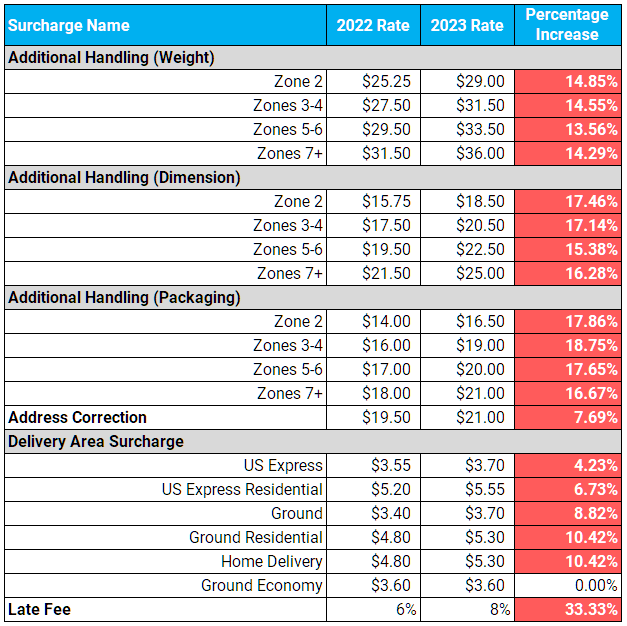
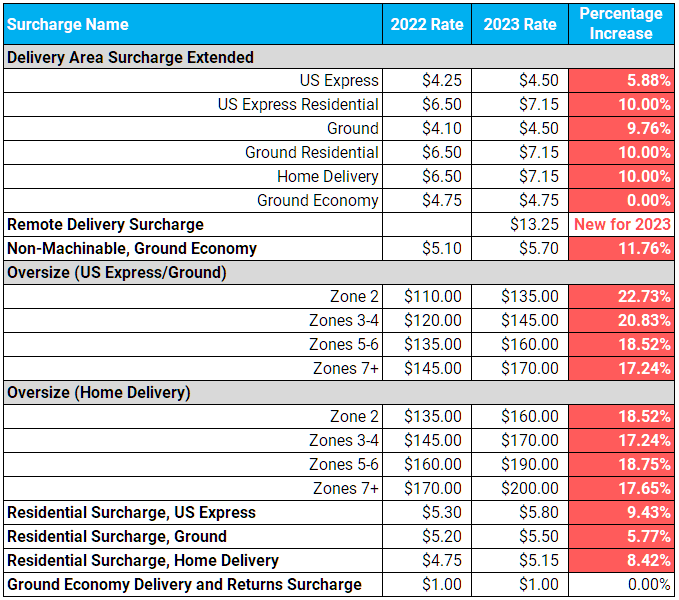
3. The ground minimum package charge (zone 2, 1 pound list rate) increased by 7.9% to $10.10
The ground minimum is increasing by higher than the overall average. This happens just about every year. This number is negotiable so shippers should look for a concession.
4. FedEx creates Remote Surcharge for certain contiguous US zip codes.
UPS introduced this fee in January 2022 and FedEx is following effective January 30, 2023. Almost 4,000 zip codes in the continental US will have a $13.25 fee added for any delivery. The fee is the same for commercial and residential shipments.
5. Increases are similar across weights but longer zones get a higher increase
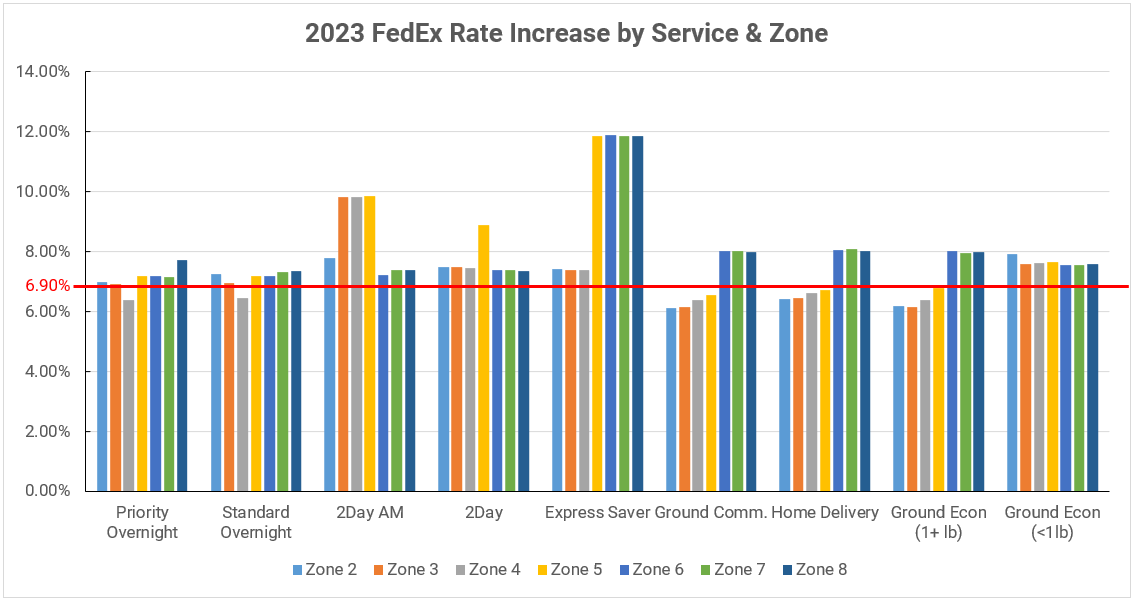
Last year, the increase was similar across zones but this year, FedEx is increasing the rates for longer zones (6-8) more than for closer zones. The increase by weight ranges is consistent this year, unlike last year, when lighter weights had a much higher increase in comparison to heavier weights. 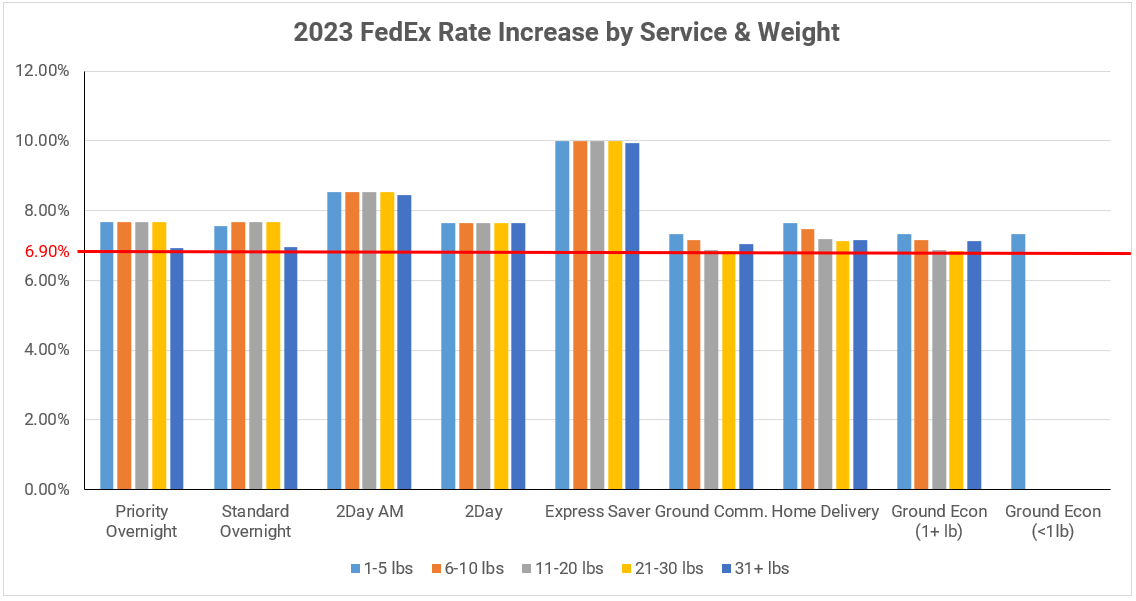
6. Some Ground Economy fees did not change
As of September 26, FedEx opted not to increase the Delivery and Returns fee and the Delivery Area Surcharge for Ground Economy.
Looking Ahead: What to Expect for 2026
While it’s helpful to analyze past trends, preparing for the future is what keeps your shipping budget in check. As we look toward 2026, FedEx has already signaled its plans, giving shippers a chance to get ahead of the curve and strategize accordingly. Understanding these upcoming changes is the first step in protecting your bottom line from unexpected cost escalations. For high-volume shippers, this foresight is not just beneficial—it’s essential for maintaining profitability and operational efficiency in the face of ever-rising logistics expenses. Let’s break down what we know so you can start planning your response now.
Continued Trend of Rate Increases
It comes as no surprise that the trend of annual rate hikes is set to continue. FedEx has announced that starting January 5, 2026, shippers can anticipate an average rate increase of 5.9% for most U.S. package services, including international shipping to and from the United States. The key word here is “average.” Your actual cost increase will depend entirely on your company’s unique shipping profile, including package characteristics and common destinations. For businesses that ship in high volumes, even a small variance from the announced average can significantly impact logistics spending. This makes it a critical time to pursue contract optimization and secure terms that mitigate the full impact of the general rate increase.
Changes in Surcharge Hikes
The general rate increase is only one piece of the puzzle; accessorial fees, or surcharges, are where costs can really add up. For 2026, FedEx will also be increasing many of its surcharges. You should prepare for higher fees on services like Additional Handling for heavy or oddly shaped packages, Oversize packages, and deliveries to residential addresses or certain remote areas (delivery area surcharges). The U.S. inbound processing fee for international ground shipments is also slated to rise. These charges can quickly inflate your overall shipping costs, so it’s essential to have full visibility. A thorough invoice audit can help you identify and recover erroneous fees, ensuring you aren’t overpaying.
How will this affect individual shippers?
The General Rate Increase will affect some shippers more than others since it’s not a linear increase. If you’re a shipper that:
- Ships large packages
- Has a high percentage of long zone shipments
- Or, incurs significant accessorial charges as a percentage of overall spend
…it is likely that you will be subject to an increase much larger than the stated 6.9%. For example, last year, shippers that used Ground Economy heavily saw increases over 15% because of the delivery and returns fee. As is the case annually with rate increases, it is vital to understand how all the combined changes will impact your individual characteristics and ultimately your overall shipping costs. When you put the analysis together, you can have an informed conversation with FedEx about mitigating the increase. This article first appeared in PARCEL. Keith Myers is a Senior Consultant for Shipware, a parcel consulting firm that specializes in cost reduction and recovery services. Prior to his work at Shipware, Keith spent seven years as a Senior Pricing Advisor at FedEx, where he analyzed parcel and LTL programs for accounts up to $100M in spend. Keith earned an MBA with certificate in Supply Chain Management from Northeastern University. He can be reached at [email protected].
The Importance of Carrier Contract Negotiation
When carriers announce a General Rate Increase (GRI), it’s tempting to take the headline number at face value. However, that percentage is just an average and rarely reflects the true impact on your business. The reality is that these increases are not linear; they affect every shipper differently depending on their unique shipping profile. For instance, surcharges for things like residential delivery, oversized packages, or delivery area often climb by much higher percentages than the announced GRI. If a large portion of your spend is tied to these accessorial charges, you could easily see your actual costs rise far beyond the average increase, significantly impacting your budget.
Working with experts can help high-volume shippers analyze their shipping data to secure better terms and mitigate the impact of annual rate increases. Services like Shipware’s contract optimization are designed to find savings opportunities that are often missed.
So, how do you push back against these annual increases? The most effective approach is to have an informed, data-backed conversation with your carrier. Many elements of your carrier agreement, including minimum package charges and specific surcharges, are negotiable, but you need a deep understanding of your own shipping data to leverage that fact. This is where working with specialists can level the playing field. Services like Shipware’s contract optimization are designed to perform this complex analysis for you. By benchmarking your rates and dissecting your shipping characteristics, experts can identify the precise areas where you can secure concessions and mitigate the impact of rate hikes, ensuring you aren’t leaving money on the table.
Frequently Asked Questions
Why is my actual shipping cost increase so much higher than the announced “average”? This is a common and frustrating experience for shippers. The “average” increase that carriers announce is just a marketing figure that doesn’t include the full impact of surcharges. Fees for things like residential delivery, oversized packages, or fuel often increase at a much higher rate than the base shipping cost. If your business frequently ships items that incur these fees, your real cost increase will be significantly higher than the headline number.
Are these rate increases actually negotiable? Yes, absolutely. While you can’t negotiate the general rate increase itself, many components of your carrier contract are flexible. Things like minimum package charges, specific surcharges, and performance incentives can often be adjusted. The key is to approach the conversation with a deep understanding of your own shipping data. When you can show the carrier exactly how the changes impact your business, you create a strong foundation for a productive negotiation.
Besides the base rates, what are the most important hidden costs I should be looking for on my invoices? You should pay close attention to accessorial fees, as this is where costs can quickly add up. Look for charges like Delivery Area Surcharges (for deliveries to less-populated areas), Additional Handling fees for non-standard packages, and residential delivery fees. Also, be aware of new charges, like the Remote Surcharge, which adds a significant flat fee to thousands of zip codes. A regular audit of your invoices can help you spot these charges and ensure they’re being applied correctly.
With rates constantly rising, is switching carriers my only real option? Switching carriers can be a part of a larger strategy, but it’s not your only move. Before making a big change, focus on optimizing your current agreement. A thorough analysis of your shipping profile can reveal opportunities to secure better terms and discounts that mitigate the impact of rate hikes. Diversifying your carrier mix is also a smart strategy, as it gives you more flexibility and leverage, but it should be done based on data, not just as a reaction to a rate increase.
How can I prepare my budget for future rate increases? The best way to prepare is to be proactive rather than reactive. Start by analyzing your shipping data from the past year to understand your specific profile—what services you use most, your common surcharges, and your typical destinations. This analysis will give you a clear picture of how a future rate hike will truly affect your costs. Use this information to have an informed discussion with your carrier about your contract terms well before the next increase takes effect.